Reading an analog meter
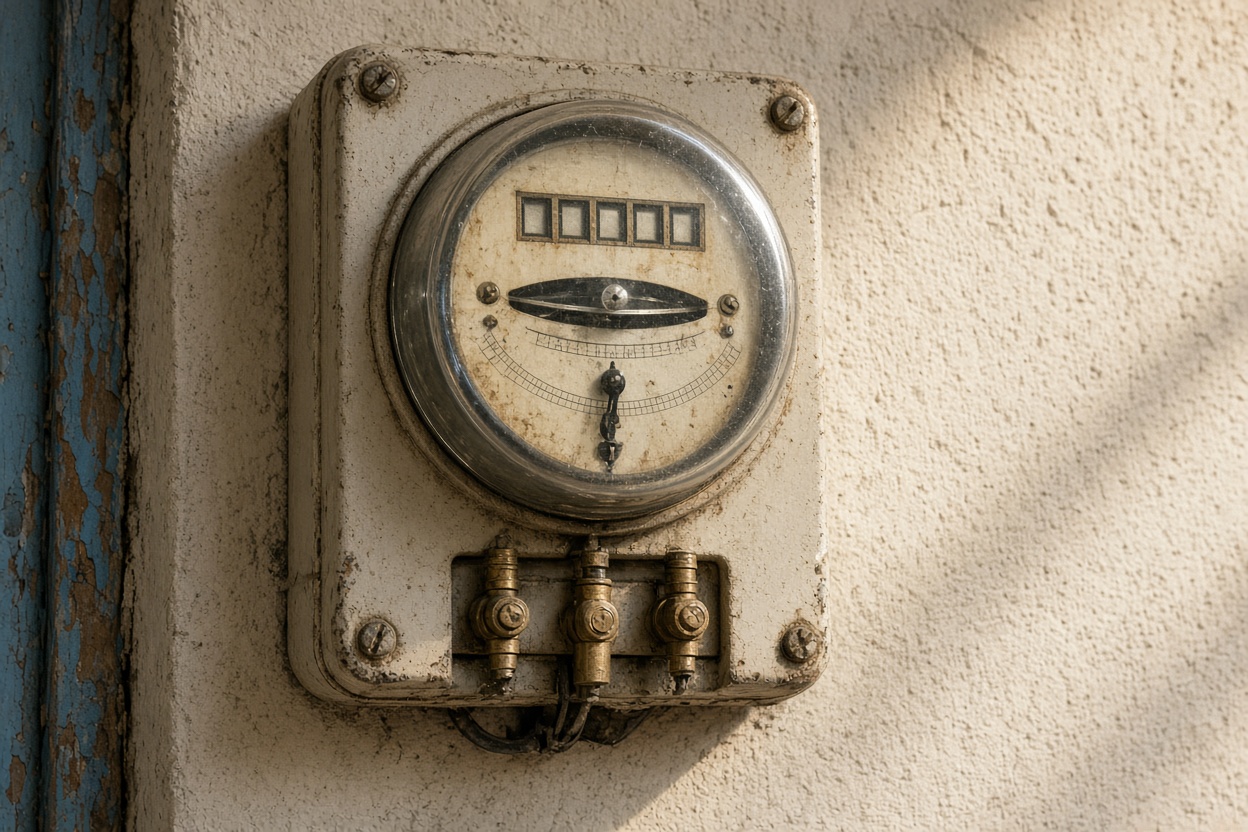
The old meter on the plaster wall shows a running total and a disk that turns with the load. You copy the figure into the notebook, and you do not treat the figure as a bill.
Where you stand and how you read
Stand in front of the meter in light that lets you tell the figures apart. Read the windows from the left to the right as they sit on the face.
Write the whole number and write the day beside it. If the last window has a different colour, ask an electrician once whether it belongs in the reading, then keep that choice every time.
A meter with pointers
Some old meters use pointers instead of windows. Each dial turns the opposite way from its neighbour, so you read the figure the pointer has passed, not the figure it is nearing.
If the pointer sits between two figures, take the lower one. If it sits between nine and zero, take nine, because the turn is not finished and zero comes only after it is finished.
What the spinning disk means
The metal disk turns when the house draws current. A black mark on the rim makes the turn visible.
An electric kettle makes it hurry, and a single lamp makes it slow. A still disk while the house is lit means the register has stopped, or the load is too small to see.
If it turns while the house is dark
Switch the lamps off and unplug what you can, then look at the disk again. If it keeps turning, some load is still there, or the meter itself will not settle.
Do not break the meter seal, and do not hang a cloth on it to cool it. Write what you saw, then call an electrician as the visit note describes.
Why the number is not a bill
The number counts units that have passed since the meter was fitted or set back to a start. The gap between two readings is use across that span, and nothing further.
A bill is a paper written outside this notebook. Here you keep the reading and the date, and you leave the rest outside the notebook.