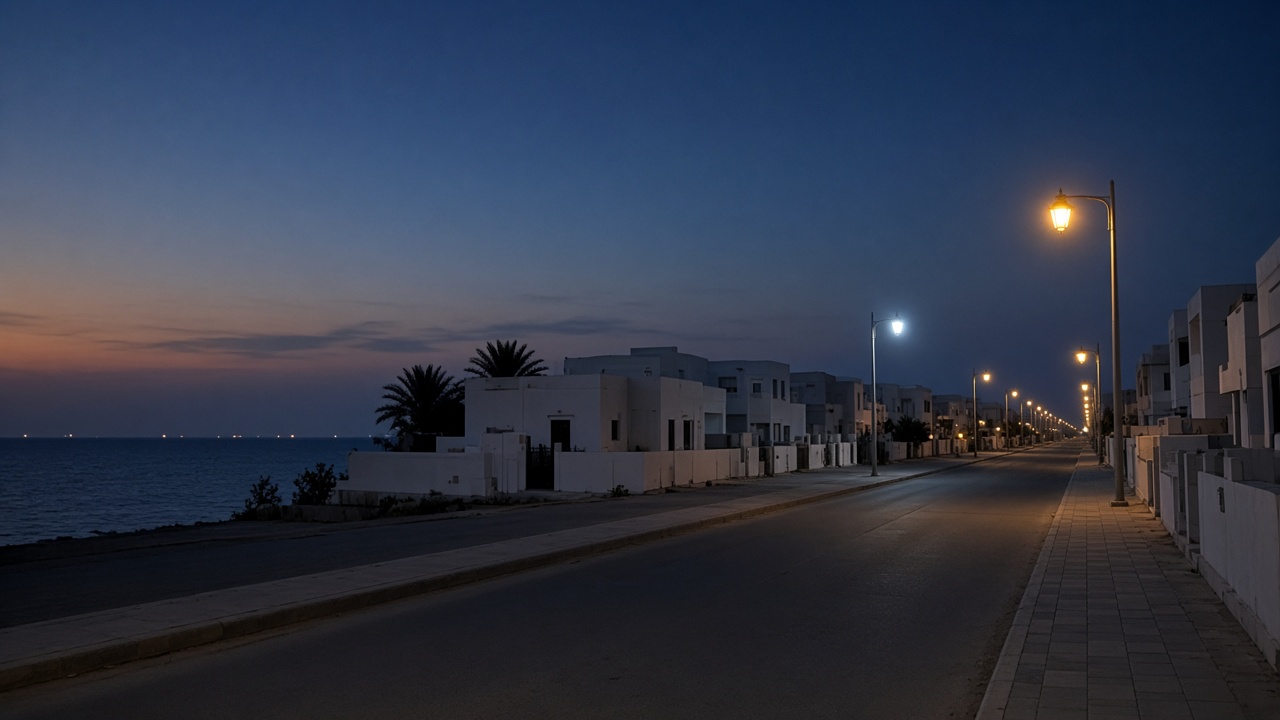
Street lamps and house lamps
A municipal lamp on the pole lights the road, and a house lamp on the wall lights your step. Mixing them up wastes the evening when one fades and the other stays.
The road lamp
The street lamp stands on the pole or at the edge of the pavement, and its current comes from the road circuit. The resident does not change its lamp from a window, and does not find its breaker inside the house panel.
If the row of poles goes dark and your house stays lit, the fault is outside the door. Note which poles went dark, from the pole in front of the house to the last pole you can see.
The house lamp
The entrance lamp and the courtyard lamp that are tied to your panel follow a breaker you can name. A switch inside the house or by the door cuts them.
If that lamp is dark and the street is still lit, start with your breaker and with the lamp itself. See whether that spot is fully dark or the lamp flickers.
The difference that matters in a fault
A municipal lamp serves people passing on the road, and a house lamp serves the person who enters your door. The shape may look alike when both sit on a wall, but the wiring is not the same.
A lamp above your door can still be yours even when it looks as if it belongs to the road, so try it from the switch. If the switch commands it, it is on your house.
Courtyard and passage
In the evening the courtyard lamp lights the place where people sit, and the passage lamp lights the step. Both are light close to the eye, not a flood like a shop front.
Place the lamp so you see the water jar and the step, not so it glares at the person sitting. A lamp above head height and back from the passage shortens the shadow on the threshold.
When one of them fades
Write whether the dark is on the road, on the step, or on both. That sentence is enough to aim the talk later.
Do not climb a road pole to tighten a lamp. The road pole is not an extension of your house panel, and the work on it is not a job for a resident at the window.