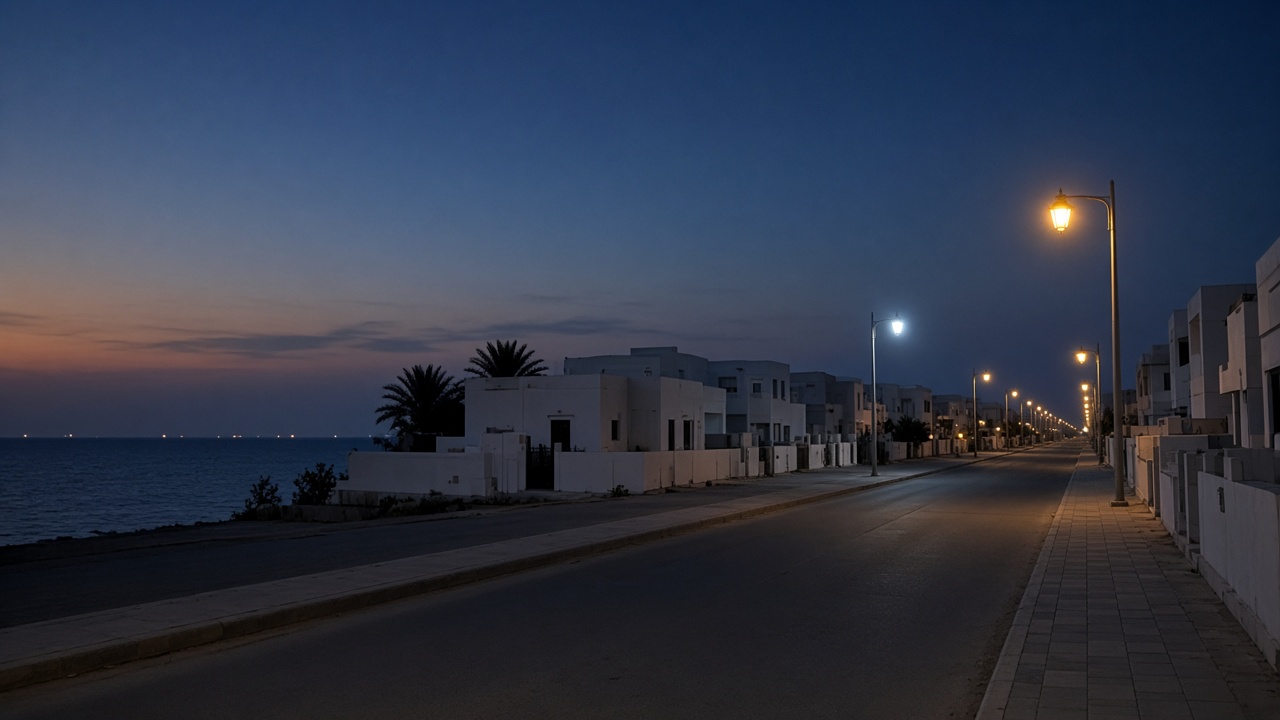
House Current
Current in this house belongs to the wall and to the hour, not to a subject kept on a far page. The meter hangs where you pass, and the lamps come on when the air cools.
Current in an ordinary house
In a gulf house the current runs from the panel to the rooms, the kitchen, and the fan. This notebook describes what the resident sees, not what an office offers.
The switch by the door lights the entrance. The breaker inside the panel cuts the room if the load climbs or a short appears.
Evening lamps and the meter on the wall
At dusk the courtyard lamps and the road lamps come on together, and each sits on its own circuit. The house lamp follows your breaker, and the road lamp does not.
The meter on the plaster wall counts the current that has passed. The figure you read is a reading, and you write it in the notebook with the day.
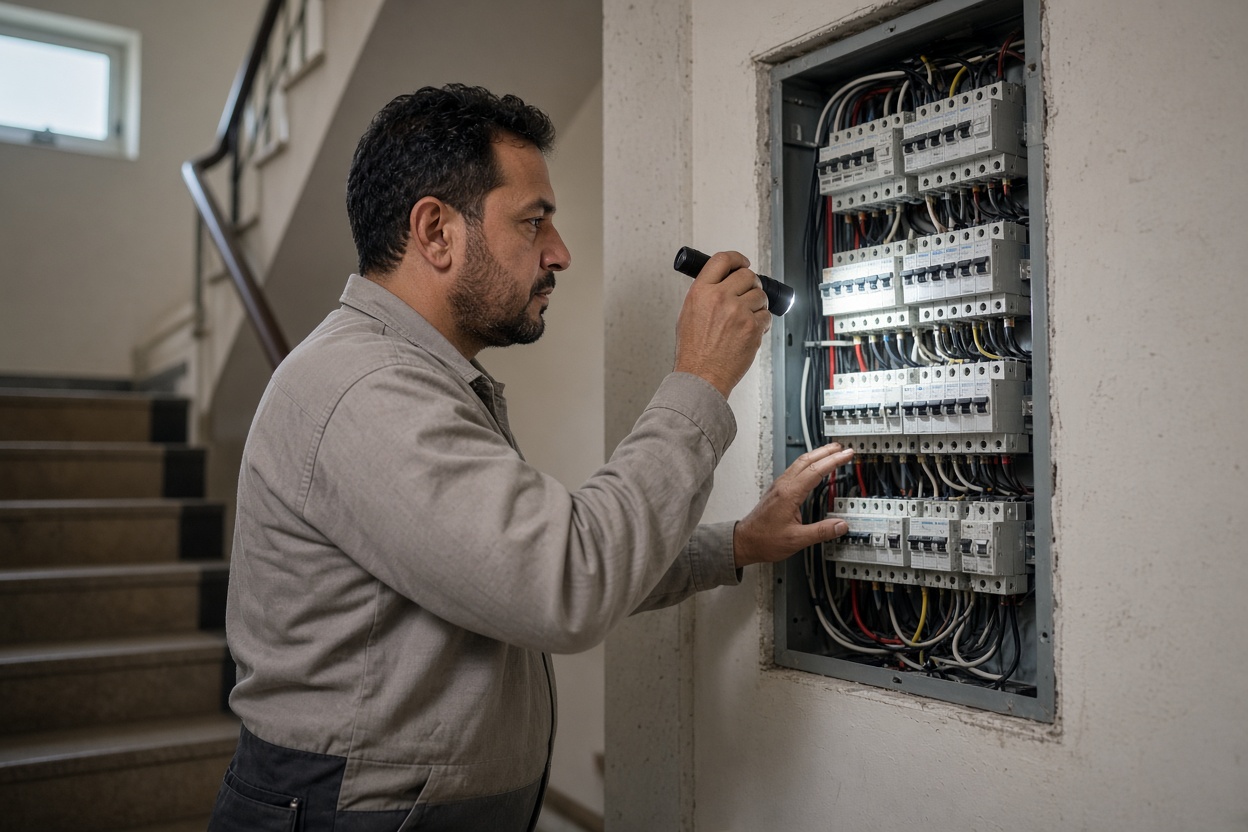
When to call an electrician
Call an electrician when part of the house goes dark, a socket runs warm, or a breaker opens and then opens again. Before the call, see what went dark and whether the neighbours still have light.
Read the practical note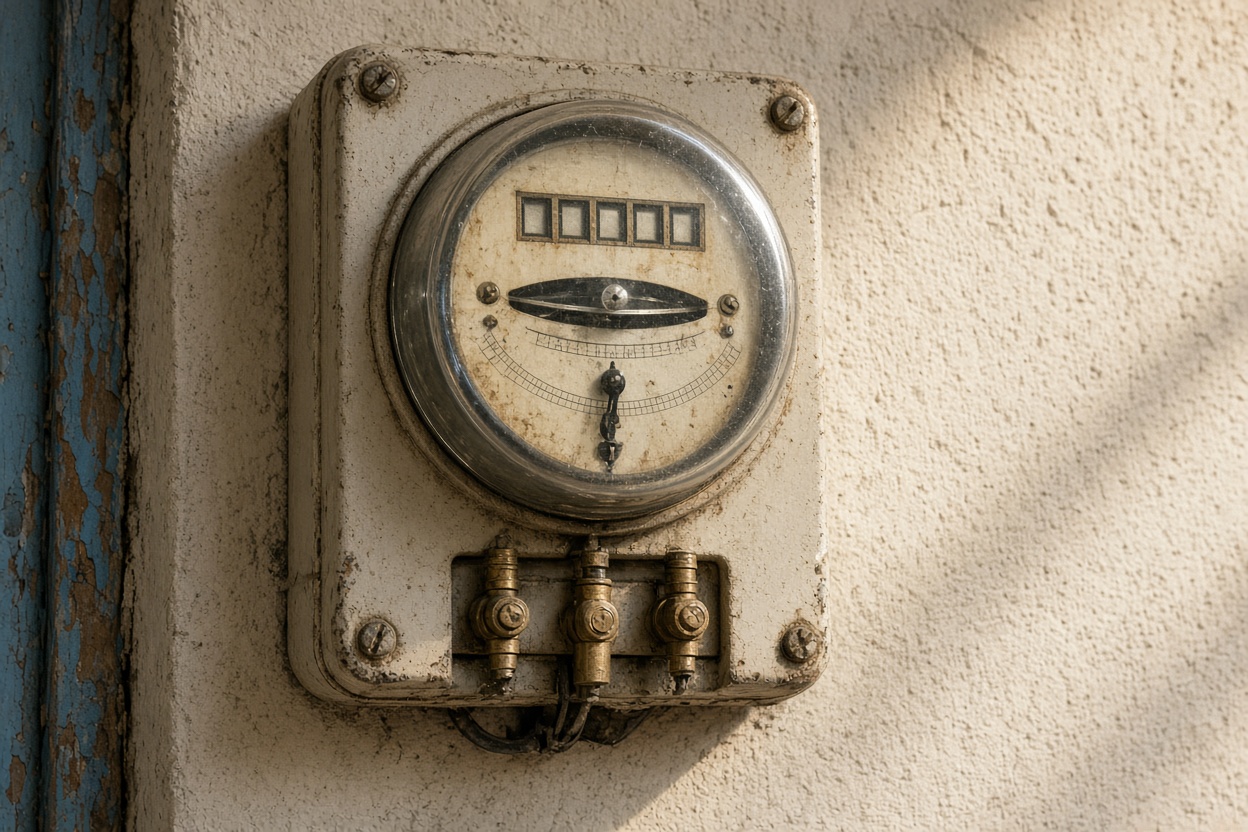
Reading an analog meter
The old meter on the plaster wall shows a running total and a disk that turns with the load. You copy the figure into the notebook, and you do not treat the figure as a bill.
Street lamps and house lamps
A municipal lamp on the pole lights the road, and a house lamp on the wall lights your step. Mixing them up wastes the evening when one fades and the other stays.
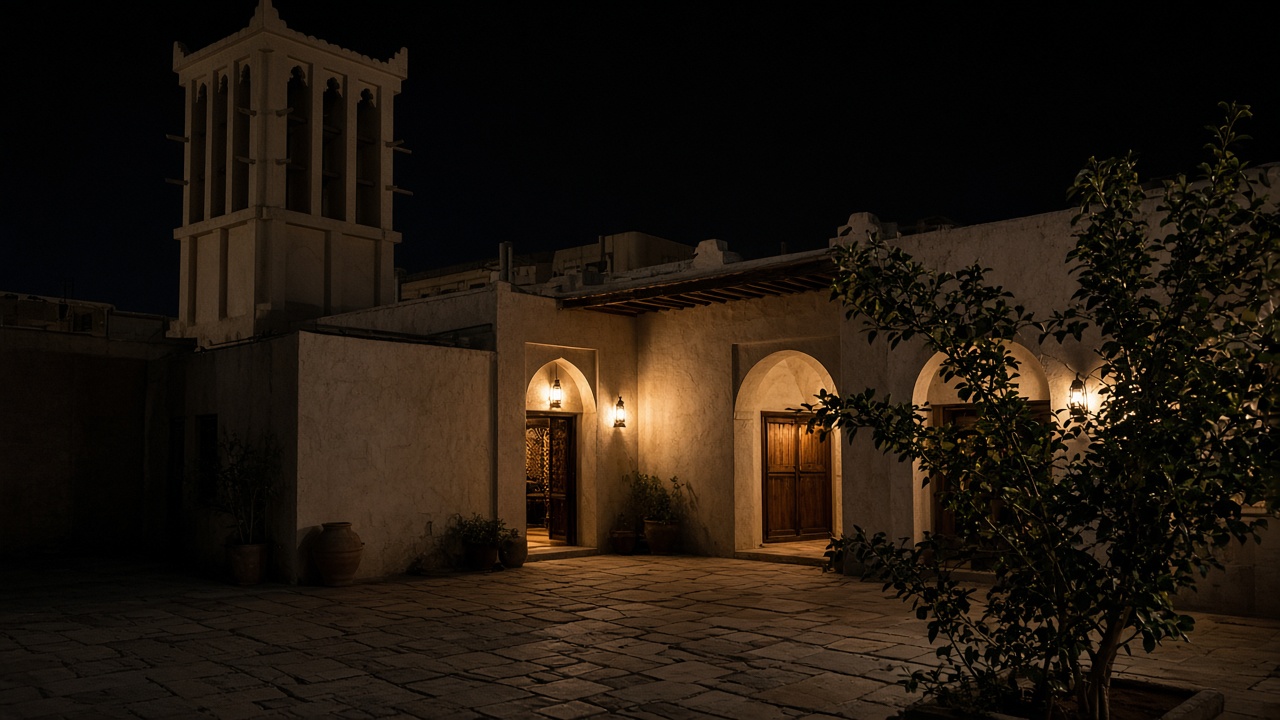
Light in a courtyard house
In the old house the rooms open onto the courtyard, and in the evening the sitting moves out into the air. The lamps here are few and low, and they are enough for faces and for the step.